Getting there and what to expect
Bogotá to the Salt Cathedral
How the bus, tourist train, car and group tour compare from Bogotá, how long to allow, what to wear and who the underground walk suits, from official sources.
See Salt Cathedral tickets on GetYourGuide ↗Quick answer
The Salt Cathedral is about 49 km north of Bogotá. The simplest independent route is a bus to Zipaquirá from the Salitre terminal or Portal Norte, which the national tourism board puts at 60 to 90 minutes, then a taxi or a walk of about 15 minutes. The tourist train runs on weekends and holidays only. A group tour collects you from your accommodation and takes about nine hours in all.
Four routes from Bogotá
| Bus | Tourist train | Group tour | |
|---|---|---|---|
| Starts from | Salitre or Portal Norte | Gran Estación or Usaquén | Your accommodation |
| Runs on | Every day | Weekends, holidays | Dates in the calendar |
| Time on the road | 60 to 90 minutes | Round trip, same day | About nine hours in all |
| Last stretch | Taxi or short walk | Bus sold on board | Van to the entrance |
| Best for | Your own hours | A rail day out | No planning |
By bus: Salitre or Portal Norte
Buses toward Zipaquirá leave from the Salitre terminal and from outside the TransMilenio Portal Norte station. The national tourism board puts the ride at 60 to 90 minutes, which depends on traffic. The Cathedral's own directions say to get off at Carrera 15 and Calle 4, by the Parque de la Esperanza, and then to take a taxi or walk, which it puts at about 15 minutes. Allow for the return trip as carefully as the outward one, because you will be coming back at the end of a long day.
By tourist train
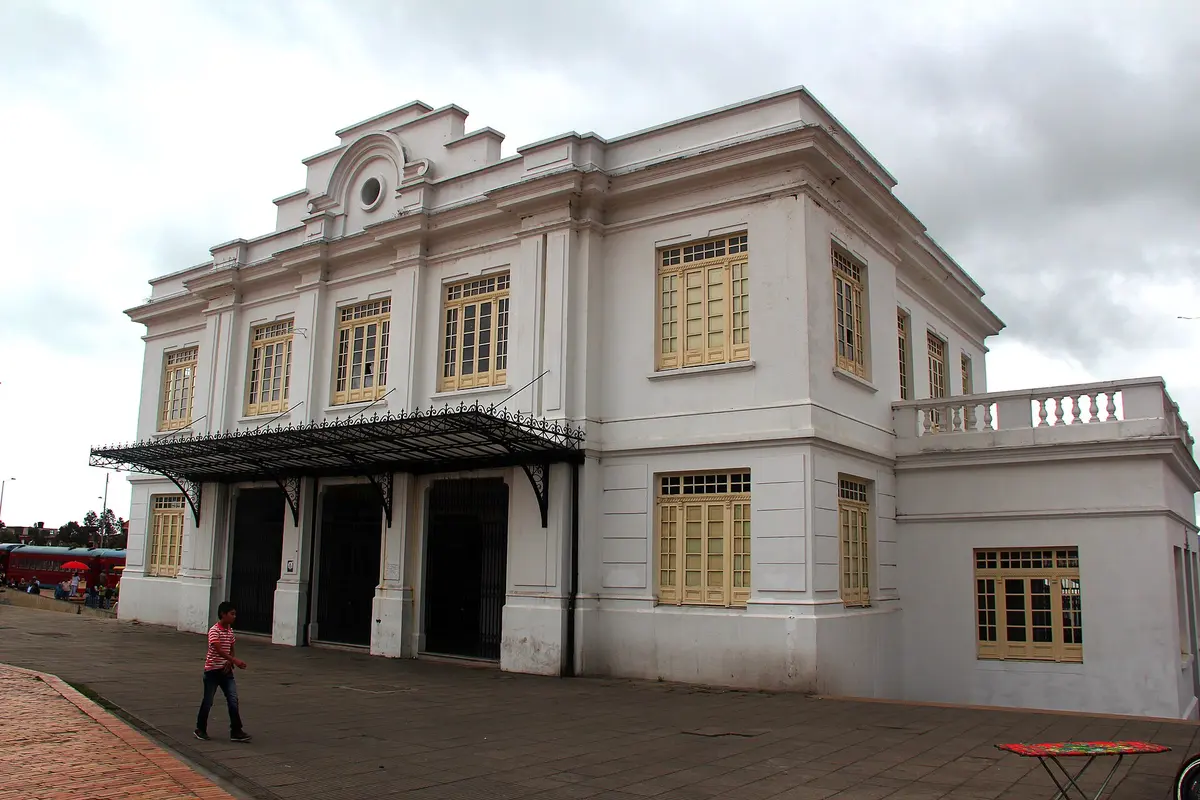
The Turistren tourist train runs from Bogotá to Zipaquirá on Saturdays, Sundays and public holidays. There is one train a day. It leaves Bogotá in the morning from the Gran Estación shopping centre or Usaquén station and returns in the afternoon, staying in Zipaquirá for about four and a half hours. Tickets are for the round trip only, valid on the date chosen, and sales open about 15 days ahead, online through Tuboleta, Turistren's official partner, or in person at its stations. The carriages have numbered seats and toilets. The fare does not include food or the Cathedral's entry.
From the station to the Cathedral
The station is not at the Cathedral. A bus from the station to the Cathedral, about 1.7 km away, is sold on the train, in cash and one way only, so for the return you use local public transport. You can also buy the Cathedral's entry on the train, in cash, with separate rates for nationals and foreigners. Foreign visitors need a passport or national identity document. Turistren advises getting back to the station early, because the train will not wait. It also warns that the stations and the approach to the Cathedral are outdoors with no rain cover, so bring a rain layer.
Driving yourself
By car, take the Autopista Norte, pass the Peaje de los Andes toll and continue on the road toward Chía and Zipaquirá. The Cathedral stands at 2,652 metres above sea level. In town, the Cathedral's directions lead you along Calle 1 to the Parque Villaveces, where it places the entrance. The national tourism board puts the drive at about an hour. The Cathedral has parking for cars, minibuses, buses and motorcycles, which it sells as an extra at the ticket office.
By group tour
The group tour starts at your accommodation in Bogotá and returns you there, about nine hours in all. The itinerary shows about 80 minutes by van on the way out, a stop in Zipaquirá, about two hours at the Cathedral, time in the town for lunch and a drive back listed at about two hours. It is subject to change. A driver-guide travels with the group, and a tour guide joins groups of more than four people. The Cathedral's entry is paid for on site. Booked through GetYourGuide, the tour can be cancelled free up to 24 hours before, and you can reserve now and pay later.
How long to allow
Turistren describes the Cathedral's basic guided visit as about an hour and a half. The group tour's itinerary allows about two hours at the Cathedral, including a guided tour, free time and shopping. If you add the museums and attractions on a Standard or Premium passport, plan for longer. By train you get about four and a half hours in Zipaquirá, and independent visitors set their own hours. Whichever way you go, plan on most of a day.
When to go
The Cathedral is open every day of the week. Wikipedia reports as many as 3,000 visitors on a Sunday, and the tourist train runs on weekends and holidays, so those days are likely to be busier. The national tourism board advises arriving early to avoid crowds. A weekday is the likelier quiet choice, but there is no public train then. The Cathedral is also a functioning church, so keep your voice low in the naves, whatever day you choose. Check the Cathedral's website for current opening hours before you travel.
What to wear and bring
Wear comfortable shoes, because the route includes uneven ground. The mine's temperature is steady and cool, so bring a light jacket. Carry your passport or ID card, since the Cathedral checks identity documents at the entrance. Lockers for bags are available at the site as an extra, and paramedics and first-aid staff are on hand. If you arrive by train, sun protection and a rain layer both make sense, because the approach is outdoors. Photography is restricted in some areas, so follow the signs.
Children, mobility and access
Children under 4 enter free. The Cathedral lends wheelchairs at no cost, but it warns that the terrain is uneven and asks visitors to move with care, and it says it runs an exit train through the mine's vehicle tunnel. The Ruta del Minero, part of the Premium passport, is closed to children under 6, adults over 60, people with reduced mobility, pregnant women and people with claustrophobia or heart problems. The group tour is marked as wheelchair accessible. Pet carts and child strollers can be rented at the ticket office.
Read next: Practical: tickets, language, and what's actually underground
What you will see underground
The route starts at the entrance with 14 small chapels for the Stations of the Cross, each with a cross and kneeling platforms carved into the halite. It leads to a dome and then to the three naves, which stand for birth, life and death and are joined beneath four columns for the Four Evangelists. The Cathedral says its Museo Monumental 180 holds relief sculptures on salt walls and sculptures in marble blocks, made by sculptors from around the world. The Cathedral calls its depth 180 metres, while Wikipedia says 200.
Read next: The 14 Stations of the Cross, and how the Cathedral was carved
Who this isn't for
A day trip to Zipaquirá is a poor fit if you have only a few hours in Bogotá: the tour takes about nine hours, and even the bus needs most of a day. It is also not for anyone counting on a weekday train, because those trains are private university charters. And if tunnels or crowds worry you, know that the route runs underground in a salt mine and Sundays can be busy.
Frequently asked questions
How far is the Salt Cathedral from Bogotá?
About 49 kilometres north of the city. The national tourism board puts the drive at about an hour and the bus at 60 to 90 minutes, depending on traffic. The Cathedral stands at 2,652 metres above sea level.
Is there a train to the Salt Cathedral on weekdays?
No. The tourist train runs only on Saturdays, Sundays and public holidays. Trains seen on weekdays are private university charters, not open to the public. Check the tourist train's own booking pages before you plan a day around it, because seats can sell out.
Can I go to the Salt Cathedral without a tour?
Yes. Buses run from the Salitre terminal and Portal Norte, and the Cathedral sells passports online and at its ticket office. The official site comes in English, Spanish, French and Portuguese, and the audio guide is available in seven languages.
How long does the visit take?
Turistren describes the basic guided visit as about an hour and a half. The group tour's itinerary allows about two hours at the Cathedral, and the whole tour takes about nine hours.
What should I wear?
Comfortable shoes and a light jacket. The mine stays cool, the ground is uneven and the approach from the train station is outdoors, so add sun and rain protection.
Do I need ID to enter?
Yes. The Cathedral checks an identity document at the entrance, and rates depend on nationality, so carry your passport or ID card. Children under 4 enter free, but older children need a ticket at their own rate.
Sources
- Rates, passports and refund policy (Catedral de Sal de Zipaquirá)
- Services (Catedral de Sal de Zipaquirá)
- Ruta del Minero: conditions and restrictions (Catedral de Sal de Zipaquirá)
- Frequently asked questions (Turistren)
- Visit the Salt Cathedral of Zipaquirá (Colombia Travel)
- Salt Cathedral of Zipaquirá (Wikipedia)